Therapets
Therapets is a gamified mental wellness tracker for therapists, combating burnout through anonymous peer connection, an emotional companion pet, and mood analytics, designed for those who heal others but struggle to heal themselves.
Visual Design
Product Design
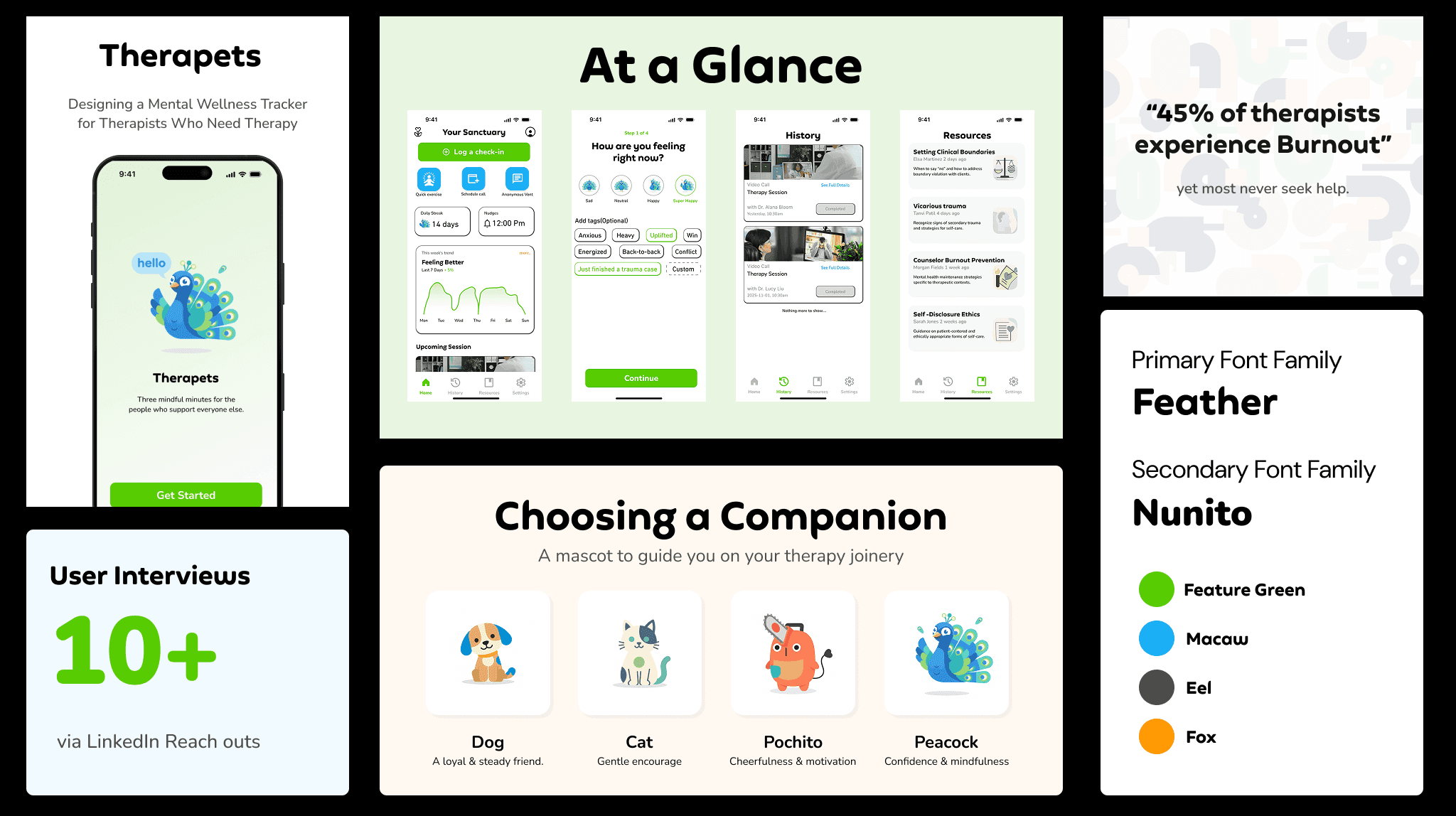
01 - Problem
"Who Takes Care of the People Who Take Care of Everyone?"
Therapists are burning out; quietly, invisibly, and at scale.
Over 45% of mental health professionals report clinical burnout. They sit across from trauma, grief, and crisis — session after session, and then go home carrying all of it. The cruel irony? The very stigma they spend their careers dismantling follows them too. A therapist seeking therapy risks being seen as unfit. By peers. By licensing boards. By clients.
Existing wellness apps weren't built for them. Headspace feels generic. Calm feels passive. Clinical tools feel like more work. There was no space designed specifically for the professional who knows exactly what burnout is — and still can't admit they're experiencing it.
The gap was clear: mental health professionals needed a tool that was private enough to trust, simple enough to use after a 9-hour day, and human enough to actually feel good.
That's the problem Therapets was built to solve.
02 - Research
"Before We Designed Anything, We Listened"
I reached out to 10 mental health professionals through LinkedIn, licensed psychologists, clinical social workers, marriage and family therapists across New York, New Jersey, and Chicago. LinkedIn was a deliberate choice: these professionals present their most polished, professional selves there. Asking them to talk about vulnerability in that space revealed just how guarded they had to be, even in conversation.
Here's what came back, and it reframed everything:
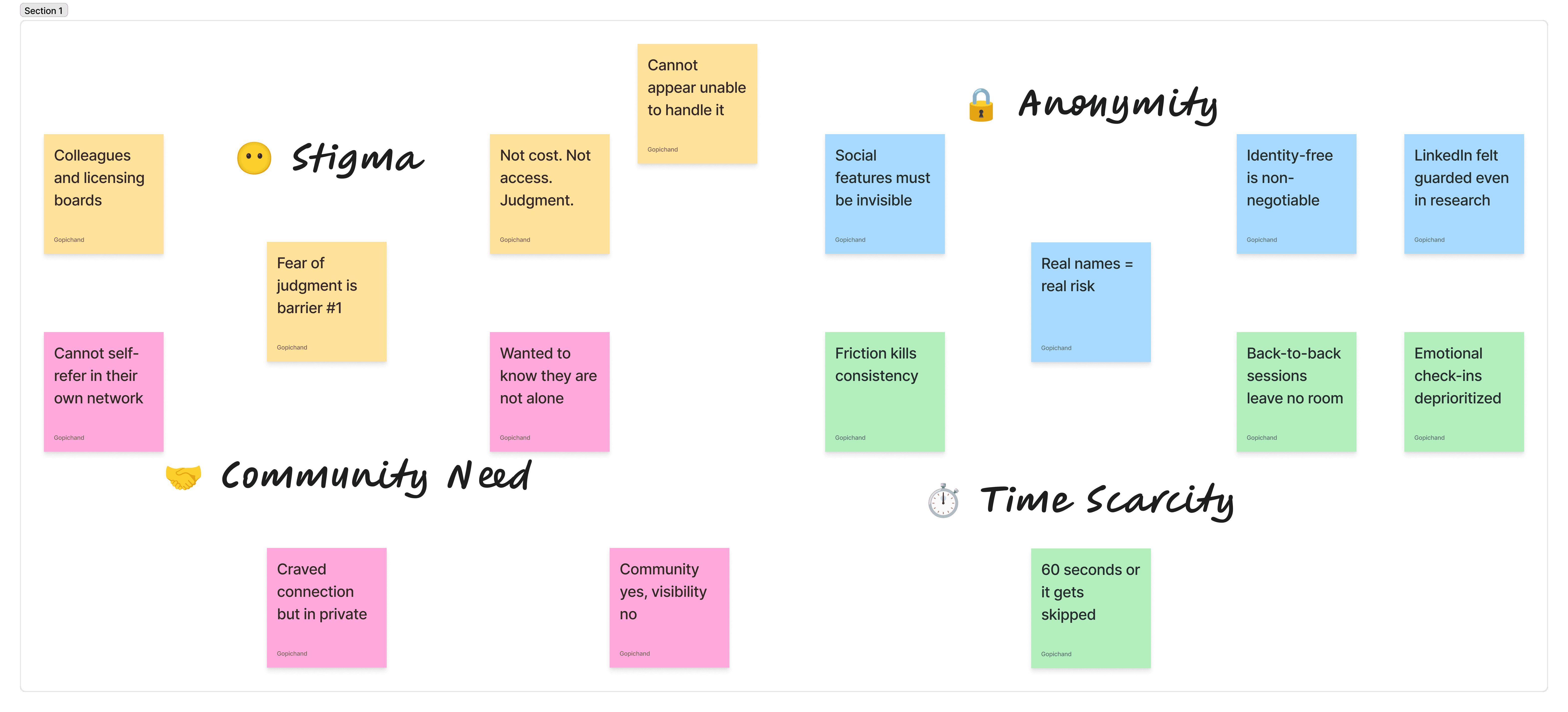
Every single participant named fear of judgment as their #1 barrier. Not cost. No access. Judgment. From colleagues, from licensing boards, from their own professional community.
Three patterns dominated the research:
🔒 Anonymity wasn't a preference; it was a requirement. Real names meant real risk. Any tool with social features had to be identity-free, or it would never be opened.
⏱️ 60 seconds or nothing. After back-to-back sessions, if emotional check-ins took more than a minute, they were skipped. Friction was the enemy of consistency.
🤝 Community was craved, but in private. Therapists wanted to know they weren't alone — but they couldn't be seen looking for that connection.
"I can't refer myself to someone in my network. They'll think I can't handle the job." — Interview participant, Licensed Clinical Psychologist
03 - Personas
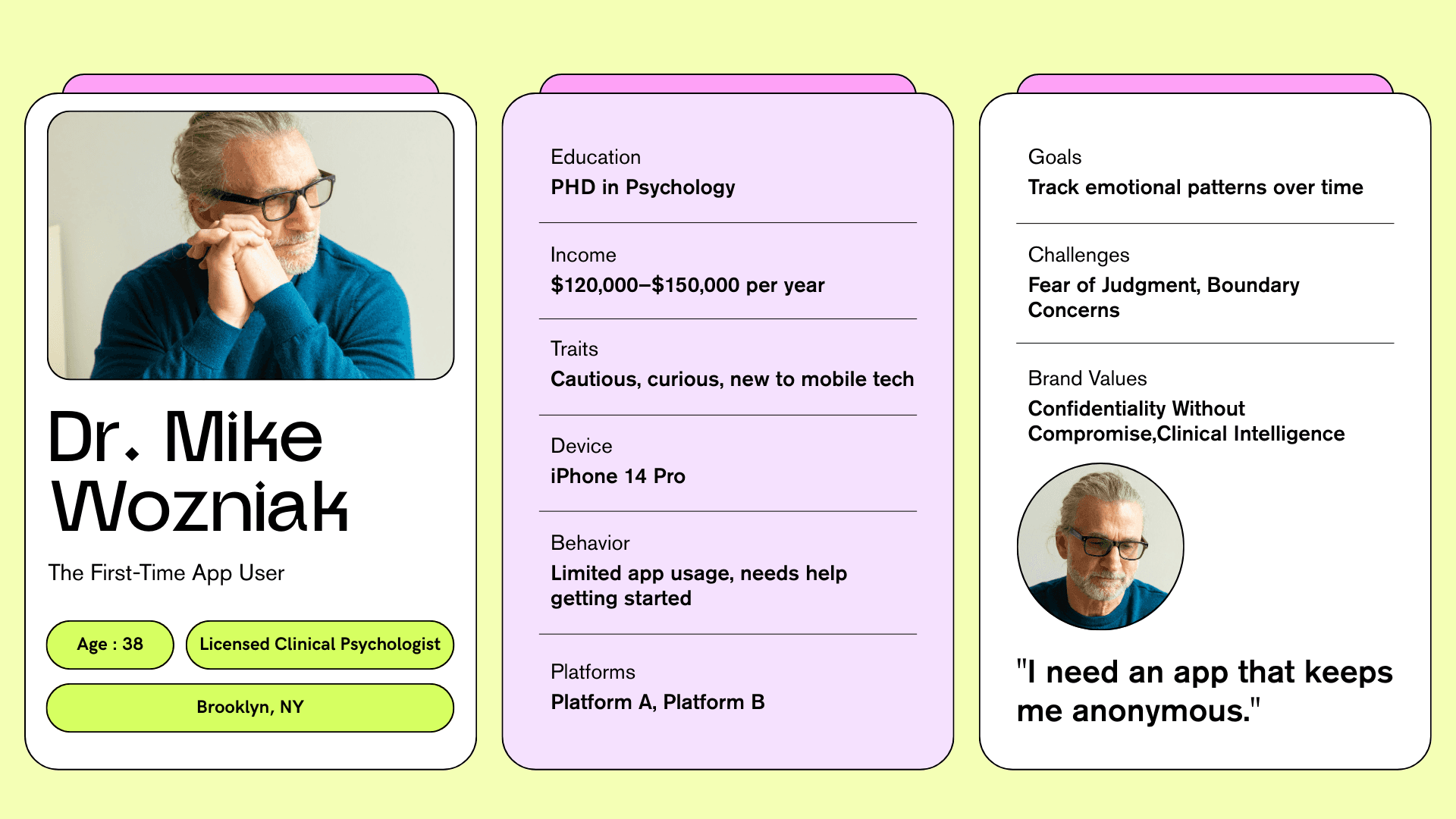
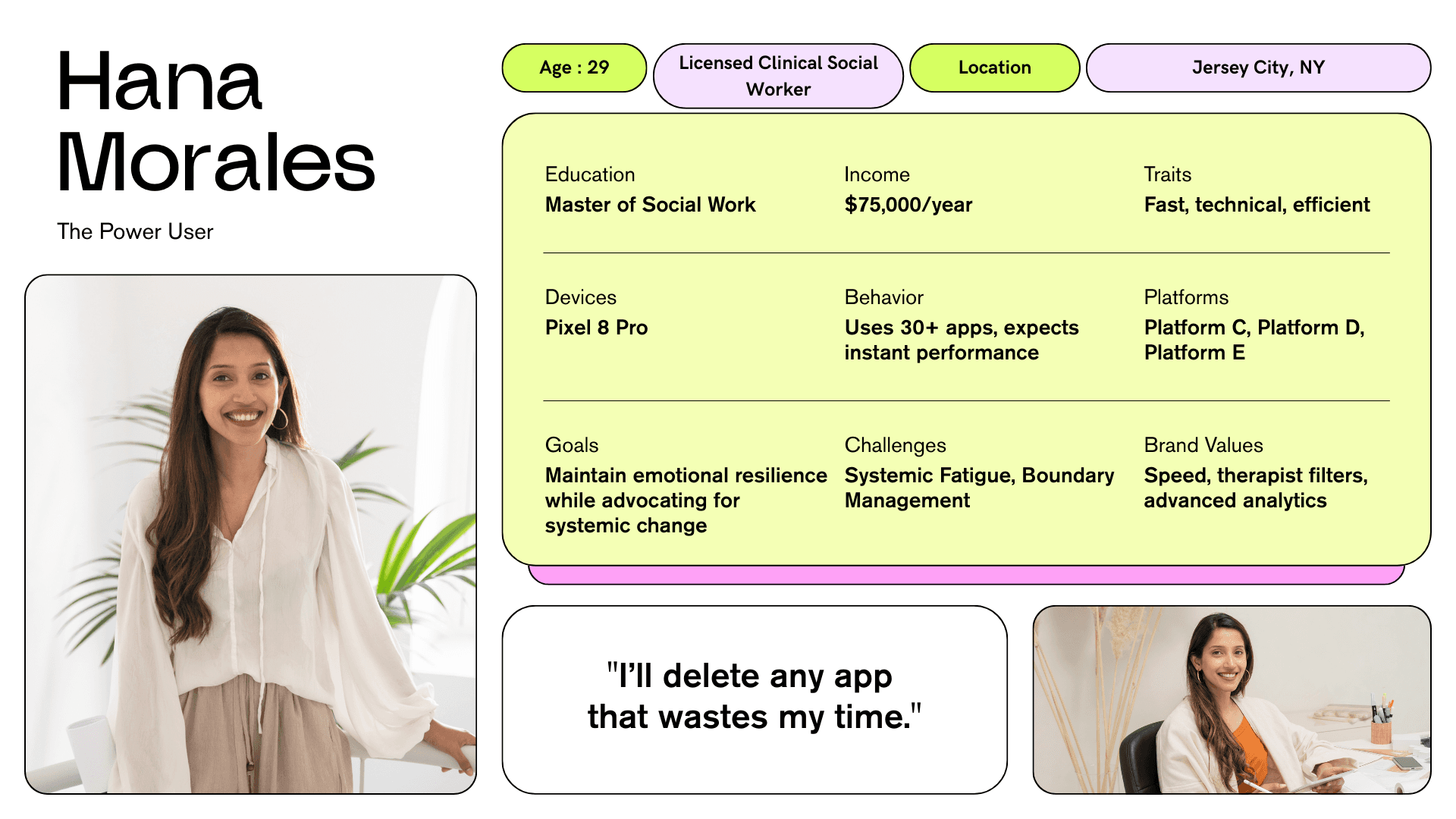
Three Therapists. One Shared Pain. Three Very Different Needs."
The research didn't give us one user; it gave us a spectrum. We identified three archetypes, each with a distinct relationship to technology, self-care, and vulnerability.
04 - SOLUTION
"A Wellness Tracker That Finally Speaks Therapist"
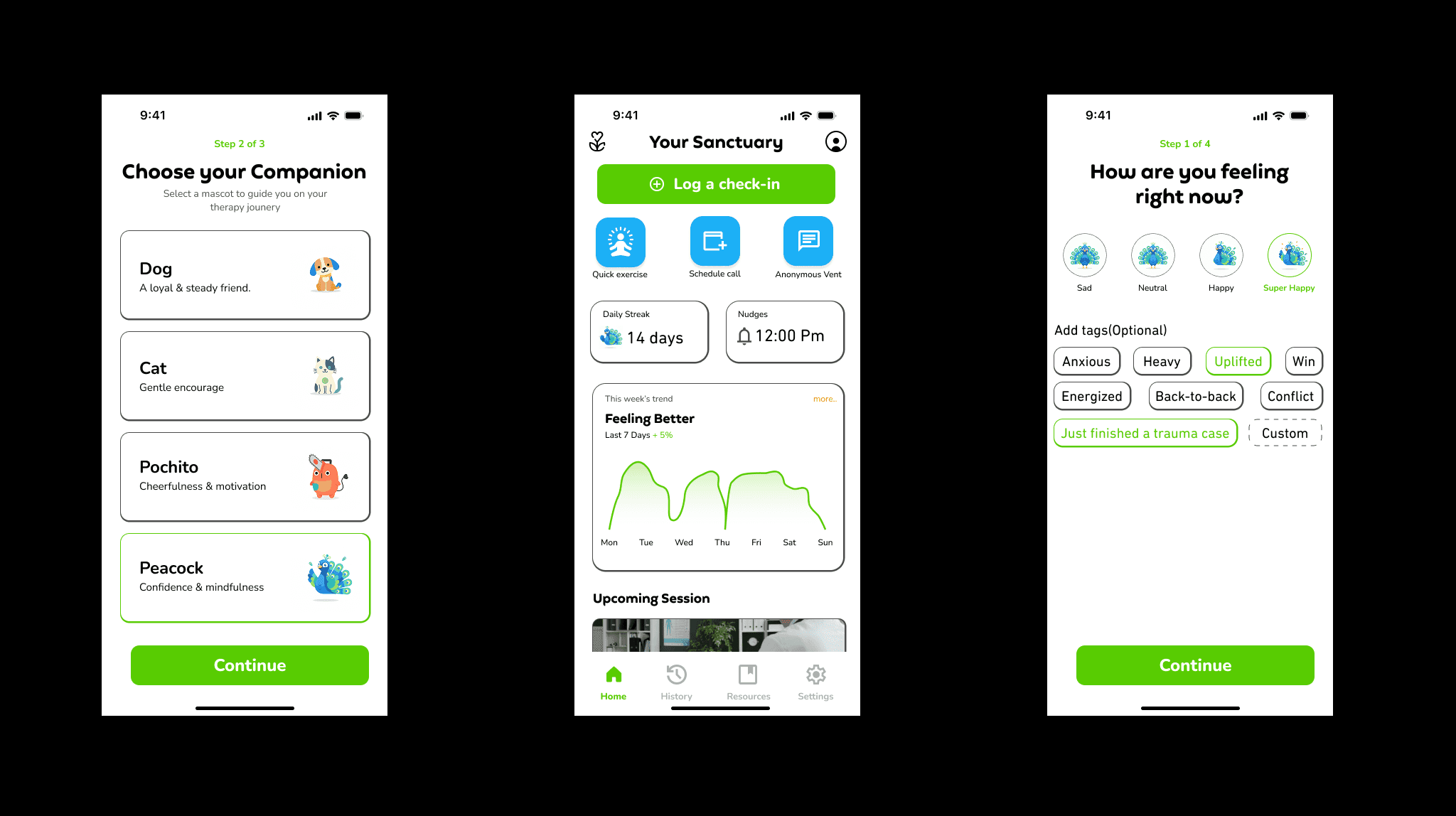
Therapets is a gamified emotional wellness tracker built exclusively for mental health professionals, combining an anonymous peer community, a responsive companion pet, and pattern-based mood analytics into one private, frictionless experience.
Five features. One clear mission: make it easier to feel like a human at the end of a hard day.
🐾 The Therapet: An animated companion whose mood reflects your consistency. Log your emotions daily — your pet thrives. Skip a few days, and your pet droops. No punishment. Just gentle, visual accountability. Inspired by Duolingo's streak mechanic, but rooted in emotional warmth instead of competitive pressure.
📓 Mood Logging Under 60 seconds. Emoji-based emotional scale + optional text or voice note, designed specifically for the post-session moment. Quick enough for Hana. Safe enough for Dr. Mike.
👥 Anonymous Forums Therapists can post, vent, ask questions, and support peers, all without revealing their identity. Moderated by community guidelines. This was the feature Dr. Mike needed most, and the one Eleanor would actually use daily.
📊 Monthly Emotional Analytics: A visual dashboard showing emotional patterns over time, which session types drain you most, which client dynamics trigger stress, and when you feel most resilient. Not clinical data. Personal data.
📝 Post-Session Notes: Private journaling tied to individual sessions. Not clinical notes, emotional processing. "How did this interaction make me feel?" A space to decompress that no EHR system was ever designed to hold.
05 - DESIGN SYSTEM
"Duolingo Taught Us That Delight Is a Design Strategy"
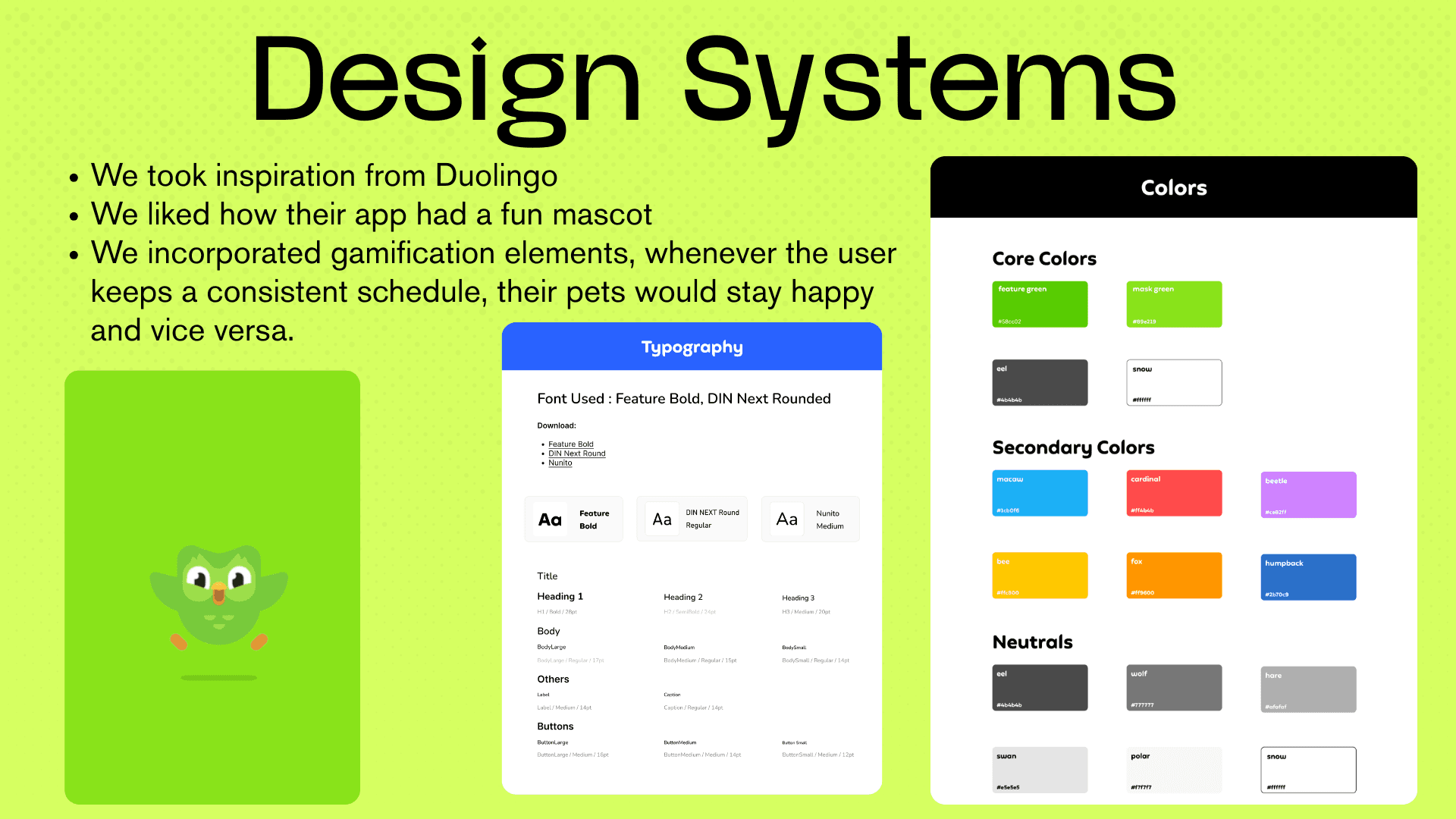
We took direct inspiration from Duolingo, not to mimic it, but to borrow its sharpest insight: emotional feedback loops drive consistency better than reminders ever could.
The design system was built around one question: What makes a burned-out therapist feel safe, seen, and just a little bit lighter?
Pet Character: Designed in multiple emotional states: thriving, neutral, drooping, and celebrating. The mascot isn't decoration, it's the emotional feedback engine of the entire app.
Color Palette: Warm and calming. Deliberately avoiding clinical blues and sterile whites, which carry unconscious associations with medical settings. The palette had to feel personal, not professional.
Typography: Readable, rounded, human. Not a serif academic tone. Not a tech startup sans-serif either. Something in between approachable authority.
08 - IMPACT & RESULTS
"What We Built, What We Learned, and What We'd Measure Next"
This was a hypothetical academic project, which means no shipped product, no live cohort. But a hypothetical project without a results framework is just an art project. So here's how we think about impact.
What we delivered:
✅ Full high-fidelity prototype - 20+ screens, wired up and click-through in Figma
✅ 10 primary research interviews across 3 states
✅ 3 validated user personas grounded in real behavioral archetypes
✅ Complete design system with component library, brand guide, and motion language
✅ Live demo presented to a class of designers and product thinkers
What success would look like -> if this shipped:
Metric | Target |
|---|---|
Day-7 Retention | ≥ 40% |
Mood Log Completion Rate | ≥ 70% within 60 seconds |
Anonymous Forum Post Rate | ≥ 25% of active users |
Day-30 Return Rate | ≥ 30% |
Self-reported Burnout Score Reduction | Measured via Maslach Burnout Inventory at Day 30 |
What I'd do differently: Run a 2-week moderated usability study with 10–15 licensed therapists. Track self-reported well-being scores against app engagement data. Specifically test whether the pet mechanic drives emotional accountability or feels condescending across different user archetypes, because Hana and Dr. Mike would respond to it very differently.
"This was a hypothetical project. But the problem is completely real — and that's exactly why I'd want to keep building it."